
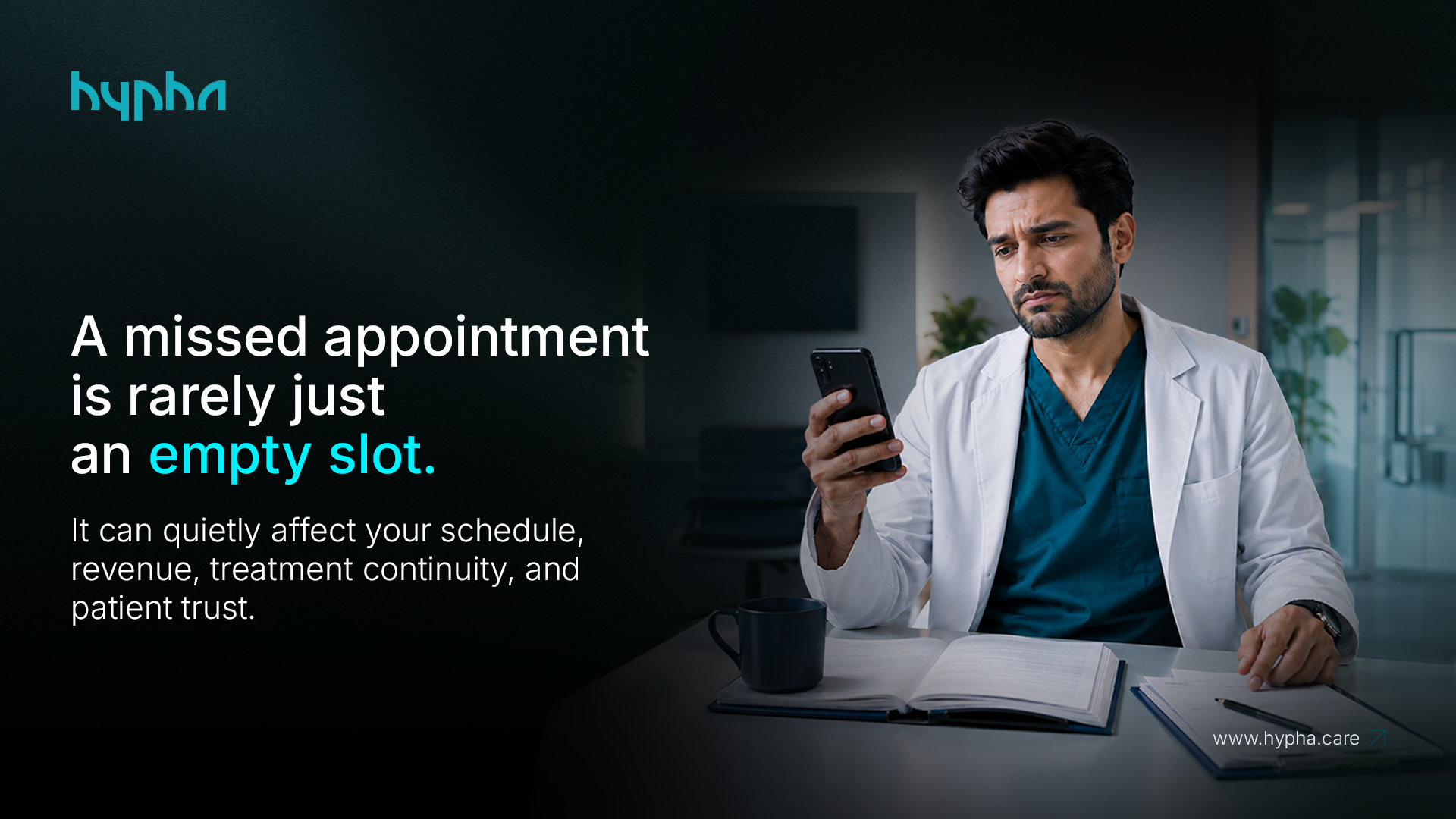
A missed dental appointment may look like a small gap in the calendar. But inside a clinic, it can affect much more than one empty slot.
It can mean unused chair time, delayed treatments, disrupted doctor schedules, lost revenue, and a front desk team trying to adjust the day at the last minute. For patients, it can also mean postponed care, incomplete treatments, and longer gaps between important follow-ups.
For many dental clinics, appointment reminders are still handled manually through phone calls, scattered WhatsApp messages, or last-minute front desk follow-ups. In busy clinics, this becomes difficult to manage consistently.
The answer is not to make the front desk work harder. The answer is to create a better appointment communication workflow — one that reminds, reassures, educates, reschedules, and keeps patients connected to care.
Quick Answer: How Can Dental Clinics Reduce No-Shows?
Dental clinics can reduce missed appointments and no-shows by using a structured communication system. This includes timely reminders through WhatsApp, SMS, and calls, patient confirmations, easy rescheduling, better patient education, shorter wait times, and follow-up after missed visits.
With a connected clinic system like Hypha, these workflows can be managed without adding more manual work to the front desk.
The goal is simple:
- Fewer missed appointments.
- Less front desk pressure.
- A smoother clinic day.
Why Dental Appointment No-Shows Matter
No-shows are one of the quietest forms of leakage inside a dental clinic.
They do not always look like a major problem. Sometimes it is just one patient who did not arrive. But over time, missed dental appointments can affect chair utilization, doctor productivity, treatment completion, patient experience, and clinic revenue.
In dentistry, timing matters. A missed RCT sitting, implant review, crown trial, extraction review, aligner appointment, or post-procedure follow-up can delay the entire treatment journey. It can also reduce the patient’s confidence and make it harder for the clinic to bring them back into care.
That is why reducing dental appointment no-shows is not only an operational improvement. It is also a patient care improvement.
Why Patients Miss Dental Appointments
Patients usually do not miss appointments for one single reason.
Sometimes they forget. Sometimes they are anxious. Sometimes they do not understand why the visit matters. Sometimes they had a poor waiting experience earlier. Sometimes rescheduling was not easy.
A good no-show reduction strategy should address all of these reasons, not just send one reminder and hope for the best.
1. Patients Forget
Dental appointments are often booked days or weeks in advance.
A patient may book an RCT, implant review, scaling, extraction follow-up, or crown fixing with full intention to attend. But as the appointment gets closer, it can get lost between work, travel, family, and everyday routines.
This is why timely reminders matter. For clinics in India and GCC markets, WhatsApp is often the most familiar communication channel for patients. But reminders do not have to depend on WhatsApp alone. Some patients respond better to SMS. Some need a call. Some important appointments may need a combination of all three.
A better reminder workflow may include:
- WhatsApp reminder one day before the appointment
- SMS reminder on the morning of the appointment
- Call reminder for high-priority treatments or unconfirmed patients
With Hypha, clinics can manage patient communication more systematically, so reminders are not dependent only on memory or manual effort.
2. Patients Do Not Confirm Early
A reminder tells the patient about the appointment. A confirmation tells the clinic whether the patient is likely to come.
Many clinics remind patients, but they do not always have a clear process to track who has confirmed, who has not responded, and who needs attention. Without this visibility, the clinic discovers the problem only when the patient does not arrive.
A better appointment workflow helps the front desk focus on the right patients. Instead of calling everyone, the team can prioritize patients who have not confirmed, patients coming for important procedures, and patients who have missed visits before.
This reduces unnecessary work and improves schedule confidence.
3. Patients Feel Anxious About Treatment
Dental anxiety is real.
Some patients delay or miss appointments not because they are careless, but because they are nervous. They may be worried about pain, cost, procedure time, treatment outcome, or what the doctor might say. This is especially common before RCTs, extractions, implant procedures, smile design consultations, and follow-up visits after a painful experience.
A clinic can reduce this anxiety through better communication. Instead of sending only a plain appointment reminder, clinics can share simple, reassuring content before the visit:
- What to expect during the procedure
- How long the visit may take
- Basic aftercare instructions
- Why the follow-up is important
- What the patient should bring
- Simple answers to common questions
This builds awareness and trust before the patient enters the clinic.
Hypha helps clinics create and share patient education templates, awareness messages, and follow-up content through connected patient communication. This makes it easier to support patients beyond the appointment reminder.
When patients feel informed, they are more likely to show up.
4. Patients Do Not Understand Why Follow-Ups Matter
For many dental treatments, follow-up visits are not optional.
A missed RCT sitting, implant review, crown fixing, aligner appointment, or post-extraction review can affect treatment progress. But patients may not always understand the importance of these visits unless the clinic explains it clearly.
A good reminder should not only say:
“You have an appointment tomorrow.”
It should also explain why the visit matters.
For example:
“Your follow-up visit is important to continue your treatment as planned.”
This small difference can improve patient seriousness without making the communication feel forceful.
Hypha allows clinics to use message templates for different treatment stages, so patients receive more relevant and helpful communication.
5. Long Wait Times Affect Patient Trust
No-shows are not always caused by poor reminders. Sometimes patients do not return because their previous experience did not feel good.
One common reason is waiting time. If a patient arrived on time but waited too long, they may feel neglected. If this happens repeatedly, they may become less likely to return for follow-ups or future appointments.
For a dental clinic, reducing no-shows is also about improving the overall patient experience.
That means clinics should track:
- How long patients wait before consultation
- Which time slots are usually crowded
- Which appointments tend to run late
- Whether certain procedures need longer buffers
- Whether walk-ins are affecting scheduled patients
Hypha’s wait time tracker helps clinics understand patient flow better and identify where delays are happening. This gives the team more visibility and helps create a smoother experience for patients.
When patients feel respected and cared for, they are more likely to return.
6. Rescheduling Is Not Made Easy
Some patients will not be able to make it. That is normal.
The goal is not to prevent every cancellation. The goal is to catch changes early enough so the clinic can adjust. A simple rescheduling option can help patients inform the clinic in advance instead of simply not showing up.
For example:
“If you are unable to make it, please let us know so we can help you reschedule.”
This keeps the tone respectful while protecting the clinic’s time.
Hypha helps clinics manage appointments and patient communication in one place, making it easier to assist patients with rescheduling and keep the treatment journey active.
A rescheduled appointment is always better than a lost appointment.
7. Missed Appointments Are Not Followed Up Quickly
The no-show workflow should not end when the patient misses the appointment. If there is no follow-up, the patient may disappear from the treatment journey.
A simple rule can help:
Follow up within one hour of the missed appointment. This is not just an operational action. It is also a care signal. A gentle call or message shows the patient that the clinic noticed, cares, and is ready to help them continue treatment.
For example:
“We noticed you could not make it for your appointment today. Your treatment follow-up is important, and we would be happy to help you reschedule.”
The tone should be warm, not blaming.
Hypha helps clinics track missed appointments, follow up with patients, and support easier rescheduling, so missed patients do not get lost in scattered notes, memory, or manual lists.
The goal is not only to reduce no-shows. The goal is to bring patients back into care.
8. Clinics Do Not Engage Patients Beyond Appointments
Strong patient relationships are not built only during consultations. They are built in the small moments between visits.
A clinic that communicates only when there is an appointment may feel transactional. A clinic that shares useful health tips, birthday wishes, treatment reminders, preventive care advice, and follow-up messages feels more present and caring. This matters because patients are more likely to return to clinics they trust.
Hypha helps clinics engage patients beyond appointments through birthday wishes, health tips, awareness messages, recall reminders, and patient education content.
This kind of communication should be thoughtful, not noisy. The purpose is not to spam patients. The purpose is to stay connected in a way that feels helpful, human, and relevant.
Better patient relationships lead to better recall, better follow-up discipline, and stronger long-term clinic loyalty.
A missed dental appointment may look like a small gap in the calendar. But inside a clinic, it can affect much more than one empty slot.
It can mean unused chair time, delayed treatments, disrupted doctor schedules, lost revenue, and a front desk team trying to adjust the day at the last minute. For patients, it can also mean postponed care, incomplete treatments, and longer gaps between important follow-ups.
For many dental clinics, appointment reminders are still handled manually through phone calls, scattered WhatsApp messages, or last-minute front desk follow-ups. In busy clinics, this becomes difficult to manage consistently.
The answer is not to make the front desk work harder. The answer is to create a better appointment communication workflow — one that reminds, reassures, educates, reschedules, and keeps patients connected to care.
Quick Answer: How Can Dental Clinics Reduce No-Shows?
Dental clinics can reduce missed appointments and no-shows by using a structured communication system. This includes timely reminders through WhatsApp, SMS, and calls, patient confirmations, easy rescheduling, better patient education, shorter wait times, and follow-up after missed visits.
With a connected clinic system like Hypha, these workflows can be managed without adding more manual work to the front desk.
The goal is simple:
- Fewer missed appointments.
- Less front desk pressure.
- A smoother clinic day.
Why Dental Appointment No-Shows Matter
No-shows are one of the quietest forms of leakage inside a dental clinic.
They do not always look like a major problem. Sometimes it is just one patient who did not arrive. But over time, missed dental appointments can affect chair utilization, doctor productivity, treatment completion, patient experience, and clinic revenue.
In dentistry, timing matters. A missed RCT sitting, implant review, crown trial, extraction review, aligner appointment, or post-procedure follow-up can delay the entire treatment journey. It can also reduce the patient’s confidence and make it harder for the clinic to bring them back into care.
That is why reducing dental appointment no-shows is not only an operational improvement. It is also a patient care improvement.
Why Patients Miss Dental Appointments
Patients usually do not miss appointments for one single reason.
Sometimes they forget. Sometimes they are anxious. Sometimes they do not understand why the visit matters. Sometimes they had a poor waiting experience earlier. Sometimes rescheduling was not easy.
A good no-show reduction strategy should address all of these reasons, not just send one reminder and hope for the best.
Book a quick demo to see how Hypha can help your clinic reduce missed appointments and create a smoother patient experience.

Frequently Asked Questions
